
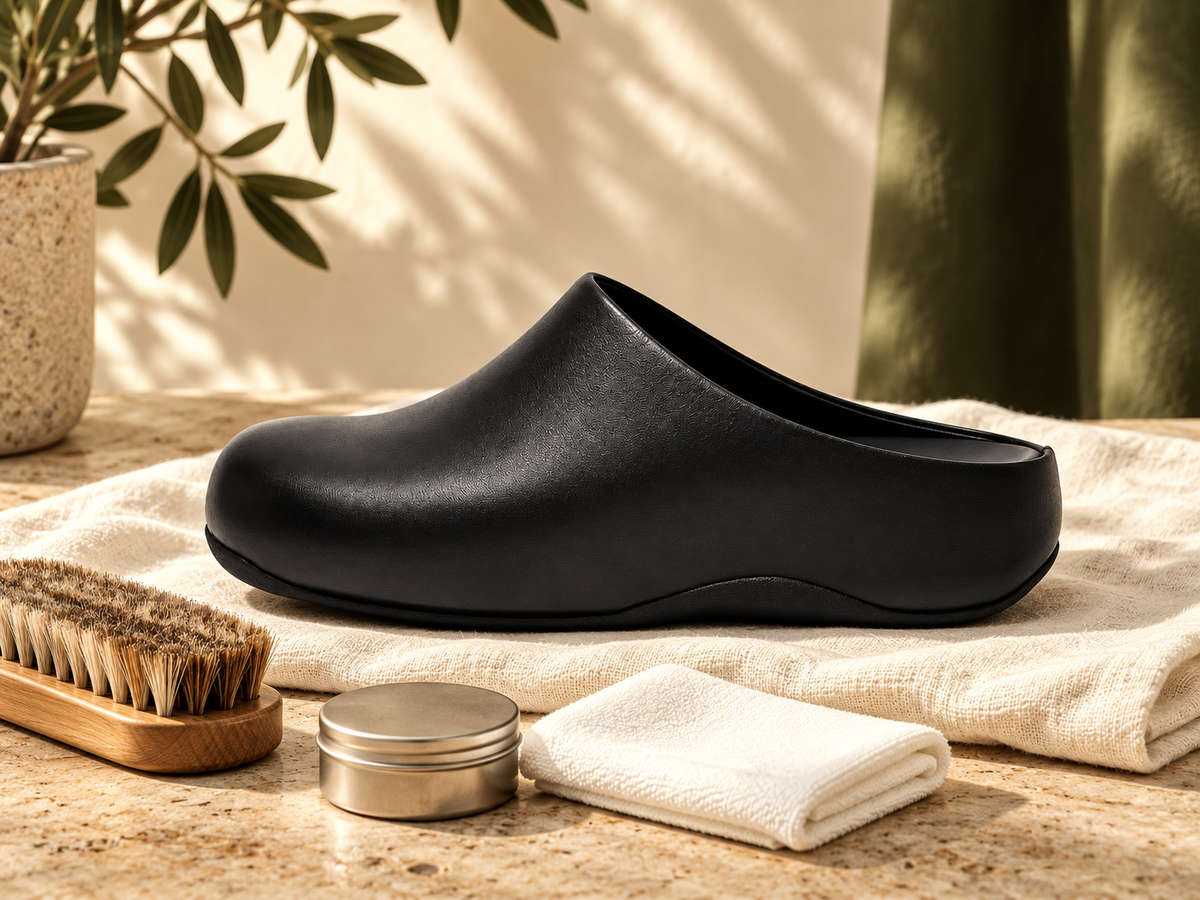
Shoe care does not need a shelf full of products. Start with the pair in front of you, the materials listed on its label or product page, and the manufacturer's instructions. Then build a routine that suits that particular construction.
Make a small, suitable care kit
A clean soft cloth and a brush appropriate to the material can be useful starting points. Add a cleaner, conditioner, or protector only when its instructions and the footwear's care guidance say it is suitable.
Keep care tools clean and separate where necessary. A brush holding dark polish is not a good choice for a pale textile upper, and a product made for smooth leather may not be suitable for suede or a coated finish.
Take a quick look after wearing
Before putting shoes away, check for loose dirt, damp areas, and debris around the sole or fastening. Remove surface dust gently when the material and its condition allow. Let wet dirt dry first if the manufacturer's care instructions recommend that approach.
This is also a useful moment to notice a loose fastening, damaged sole, or change in the upper. Set a damaged pair aside until you can assess it or ask a shoe-repair professional for advice.
Treat marks carefully
Read the directions on both the shoe and the care product. Work on a small area first and let it dry so you can check the result. Gentle repeated attention is usually a more controlled approach than adding a large amount of an untested product at once.
Avoid mixing household cleaning products or using strong chemicals without material-specific guidance. A shoe can contain adhesives, dyes, decorative details, and several different surfaces, each with its own limitations.
Give damp shoes time to dry
Blot excess moisture with a clean cloth and place the shoes in a ventilated space away from direct heat. Open adjustable fastenings, and remove an insole only if it is designed to come out.
Avoid a radiator, hair dryer, or tumble dryer unless the maker specifically permits that method. Heat can affect materials and construction. Do not put a damp pair into an enclosed bag for long-term storage.
Store the shape you want to wear
Once dry, give each pair enough space that the uppers are not crushed or folded under another pair. A clean, ventilated spot away from prolonged direct sunlight is a practical place to start.
If you use a shoe support or insert, choose one that suits the construction and does not stretch it. Keep any original care instructions somewhere easy to find, particularly for unusual finishes or mixed materials.
Let the material set the routine
There is no single cleaning method for every shoe. Smooth leather, suede, textile, and synthetic materials can need different products and techniques. Use our Footwear care guide as a general reference, then follow the instructions for your exact pair.
If the material or recommended method is unclear, pause before applying a product. A specific question about the shoe is a better next step than an experiment that cannot be undone.
Apply the routine to your footwear edit
Explore FG-268 leather clogs, sneakers and slides, checking the material information for each pair. For styling ideas, read five ways to wear leather clogs.
Continue exploring: what to check before choosing a pair.